
Why Are My Windows Wet Every Morning?
Quick Answer
Your windows are wet every morning because the air inside your home holds more moisture than the cold glass can tolerate. Overnight the glass cools, and moisture from breathing, showers, cooking and laundry condenses on it. The fix is to lower the indoor humidity, vent moisture outdoors and keep the glass warmer.
What Is Happening on the Glass
Warm air can hold more water vapor than cold air. When room air touches cold glass, it cools, and the extra moisture turns into water on the window. NDSU Extension compares it to the water that forms on the outside of a cold drink.
A Department of Energy report by Pacific Northwest National Laboratory (PNNL) puts it precisely: condensation happens when the surface of a window drops below the dew point or frost point of the air next to it. If it’s cold enough, you get frost or ice instead of water.
So two things decide whether your windows sweat:
- How much moisture is in the indoor air. EPA says condensation “can be a sign of high humidity.”
- How cold the glass gets. The colder the glass, the less moisture it takes to wet it.
Why It Happens in the Morning
Wet glass shows up at the start of the day because the night stacks up every factor at once:
- It’s colder outside. NDSU Extension notes that the colder the weather outside, the greater the chances of condensation on the inside of windows.
- You’ve been breathing all night. NDSU Extension says each person adds 3 pints of water vapor to the air every day just from breathing. In a closed bedroom, that moisture has nowhere to go.
- Curtains and shades are closed. The PNNL report found that insulating shades keep warm room air away from the window, which lowers the temperature of the glass and frame and raises the chance of condensation.
- The heat may be turned down. EPA lists increasing the air temperature as one of the actions that help prevent condensation, so a cooler house at night works the other way.
Bedrooms, kitchens and bathrooms usually get the worst of it, because that’s where the moisture is made.
Where the Extra Moisture Comes From
Everyday living puts a lot of water into the air. University of Missouri Extension says an average family of four can add more than 6 gallons of moisture to the air each day. Its list of daily sources includes:
| Source | Moisture per day |
|---|---|
| Drying clothes in a dryer vented into the house | 26.4 pounds |
| Breathing and perspiring | 16.8 pounds |
| Washing clothes | 4.3 pounds |
| Mopping floors | 2.4 pounds |
| Cooking on an electric range without exhaust vent | 2 pounds |
| Shower or bath | 2.0 pounds |
| Dishwashing by hand | 1.0 pounds |
| House plants | 1.0 pounds |
Some sources are less obvious. Advanced Energy, a North Carolina energy nonprofit, says moisture can also come from a damp or wet crawl space or basement, a leaky roof, plumbing leaks, and unvented combustion devices such as heaters, fireplaces, gas ranges and ovens. It says a typical “ventless” heater or fireplace puts about a gallon of water into the air roughly every three hours.
Is It a Problem?
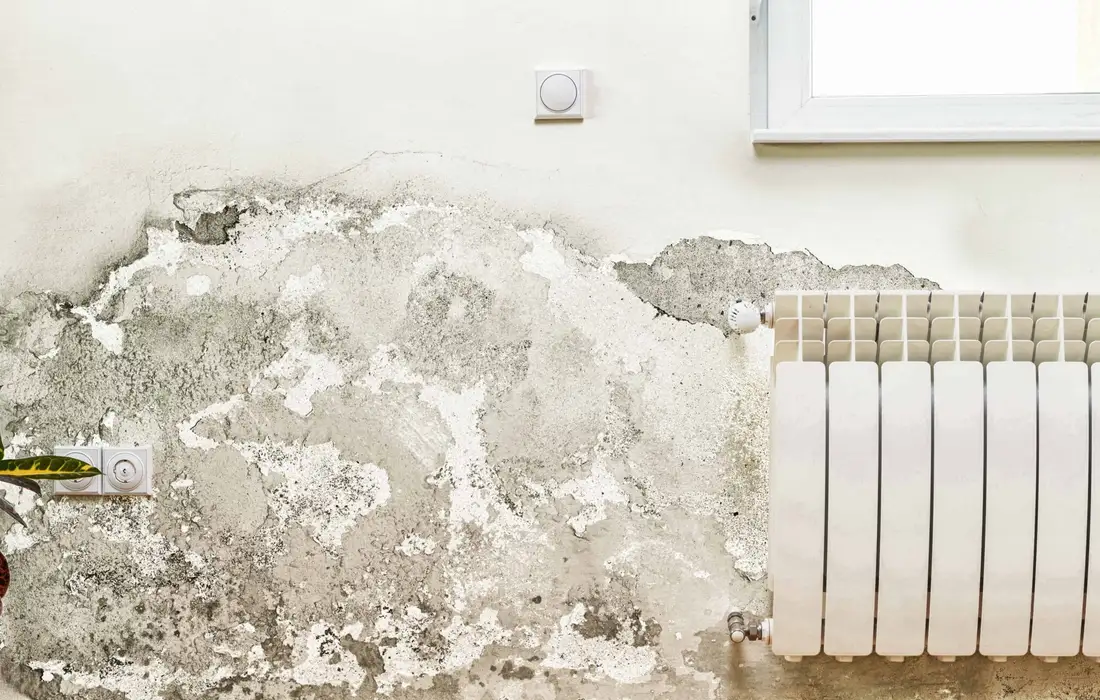
A thin film on the coldest mornings is mostly a nuisance. NDSU Extension says the trouble starts as more moisture forms: it can damage the window and the wall around it. In its words, “Excess moisture also can be a breeding ground for mold.”
University of Missouri Extension describes the same risk: excessive moisture can condense on walls, windows and other cold surfaces, causing paint to peel, wood to rot and mold to grow. EPA’s mold course notes that mold is often found on walls in cold corners behind furniture, where condensation forms.
Watch for:
- Water running down the glass and pooling on the sill
- Black or gray spots on the sill, frame, caulk or nearby wall
- Peeling paint or soft, dark wood around the window
- A musty smell in the room (see why your house smells musty)
On health, CDC says mold can cause a stuffy nose, sore throat, coughing or wheezing, burning eyes or skin rash in some people, and that people with asthma or mold allergies may have severe reactions. If anyone in your home has symptoms, see a doctor.
How to Stop Your Windows Sweating
Work through these in order, starting with the cheapest.
- Measure the humidity. A humidity meter, which EPA describes as a small, inexpensive ($10-$50) instrument sold at many hardware stores, tells you where you stand. EPA recommends keeping indoor humidity below 60 percent, ideally between 30 and 50 percent. For winter, NDSU Extension suggests about 40 percent, and University of Missouri Extension gives 35 to 50 percent during the heating season in cold climates.
- Run exhaust fans that vent outdoors. Use the bathroom fan during and after showers, and the range hood while cooking. Both NDSU and Missouri Extension stress that fans must vent outside, not into the attic or crawl space. Advanced Energy adds that a recirculating range hood does not remove moisture.
- Check that the bathroom fan actually moves air. Advanced Energy suggests holding a few squares of toilet paper against the grille with the fan on. If the paper falls, the fan isn’t pulling air.
- Stop adding moisture you don’t need to. Missouri Extension advises never venting a clothes dryer indoors, avoiding hanging wet clothes inside in cold weather, and covering pots while boiling food.
- Open shades and drapes during the day. The PNNL report recommends opening insulating shades in the daytime so condensation can dry, and wiping any water left on the sill at least every few days. If shades must stay closed, it suggests raising the bottom rail about half an inch off the sill. NDSU Extension suggests leaving drapes open at night if water forms behind them, though that costs some heat.
- Keep air moving across the glass. Missouri Extension suggests a ceiling fan and keeping furnace registers clear of furniture. EPA also lists using fans to increase air movement.
- Wipe the glass and sill dry each morning. EPA’s advice when you see condensation is to act quickly to dry the wet surface and reduce the moisture source.
Should you buy a dehumidifier? It helps in some homes, but NDSU Extension says dehumidifiers are generally ineffective if humidity is below 50 percent, which is common in winter. If your meter reads higher than that, our guides on how much water a dehumidifier removes and closing the door while it runs explain how to get the most from one.
When the Windows Themselves Are the Issue
Sometimes the humidity is reasonable and the glass is simply too cold. NDSU Extension says that at 40 percent indoor humidity, condensation should begin to appear on a double-pane window when the outside temperature dips below zero, while triple-glazed windows should stay clear until it gets closer to minus 40 F. If your windows are wet at moderate humidity on milder nights, they may be underperforming.
The PNNL report says the problem can be solved two ways: by reducing indoor humidity, or by installing better windows or adding a storm window or interior panel insert. Missouri Extension notes that a storm window raises the surface temperature of the glass, which reduces condensation, and that it should be installed with at least half an inch of space between the two windows and sealed on the edges.
Moisture between the panes is different. InterNACHI, a home inspectors’ association, says a misty or foggy double-pane window means the seal has failed, and the window needs to be repaired or replaced. Wiping the glass or lowering your room’s humidity won’t clear it.
When It’s More Than Condensation
Call in a professional when:
- Mold covers more than about 10 square feet. EPA says that in most cases you can clean a smaller patch yourself, and points to its remediation guidance for anything larger. See mold remediation.
- The wall or sill below the window is soft, stained or swollen. That suggests water has been getting into the wall, from condensation or from a leak around the window. EPA says wet materials should be dried within 24 to 48 hours to prevent mold growth, which a water damage restoration crew can help with.
- Humidity stays high no matter what you do. A wet crawl space, basement or plumbing leak may be feeding it, according to Advanced Energy.
- You use an unvented heater or fireplace. Advanced Energy warns that these may give off carbon monoxide and other harmful gases and says they should not be used in homes.
Don’t paint over mold on the frame or sill. EPA says to clean up the mold and dry the surfaces first. In its words, “Paint applied over moldy surfaces is likely to peel.”
Damp Windows That Keep Coming Back?
If you’ve lowered the humidity, run the fans and the windows still stream every morning, or there’s mold and soft wood around the frame, the moisture may be coming from somewhere you can’t see. We’ll connect you with local water damage and mold professionals who can find the source and fix it. Call us any time, or request a free estimate.
Frequently asked questions
Is it normal to have condensation on windows every morning?
A little on the coldest mornings is common, especially on single-pane or older windows. Water on the glass every morning, or water that runs down onto the sill, is a sign the indoor air is too humid for how cold the glass gets. EPA says condensation can be a sign of high humidity.
What humidity should I keep my house at to stop window condensation?
EPA recommends keeping indoor humidity below 60 percent, ideally between 30 and 50 percent. In cold weather you may need to stay toward the low end: NDSU Extension suggests aiming for about 40 percent in winter, and University of Missouri Extension gives 35 to 50 percent for the heating season in cold climates.
Will a dehumidifier stop my windows sweating in winter?
Sometimes, but not always. NDSU Extension says dehumidifiers generally are ineffective if humidity levels are below 50 percent, which is common in winter. NDSU Extension suggests running bathroom and kitchen fans that vent to the outside instead.
Can window condensation cause mold?
It can. University of Missouri Extension says excessive moisture condensing on walls, windows and other cold surfaces can cause paint to peel, wood to rot and mold to grow. EPA advises drying wet surfaces quickly and reducing the moisture source.
Why is there condensation between the panes of my double-pane window?
That moisture is inside the sealed unit, not in your room. According to InterNACHI, a home inspectors' association, fog between the panes means the seal has failed, and the window needs to be repaired or replaced. Wiping it or lowering your humidity won't fix it.
Should I keep my curtains or blinds closed at night?
Insulating shades and heavy drapes can make the glass behind them colder and wetter. A Pacific Northwest National Laboratory report for the Department of Energy recommends opening shades during the day so condensation can dry. NDSU Extension suggests leaving drapes open at night if condensation forms behind them, at some cost in heat loss.
Sources
- EPA: A Brief Guide to Mold, Moisture and Your Home
- EPA: Mold Course, Chapter 2
- CDC: About Mold and Your Health
- NDSU Extension: Window Condensation Common Problem (Jan. 2011)
- University of Missouri Extension: Condensation Control (EM112)
- Pacific Northwest National Laboratory for the US Department of Energy: Evaluation of the Thermal and Moisture Performance of Insulating Shades (Sept. 2022)
- Advanced Energy: Managing Window Condensation
- InterNACHI: Condensation in Double-Paned Windows