Should You Close the Door When Using a Dehumidifier?
Quick Answer
Usually, yes. ENERGY STAR and dehumidifier manuals say to close the doors and windows of the space you’re drying, so the unit isn’t trying to dry the rest of the house or the outdoors. Leave the door open only when the unit is sized for the larger area, or the air beyond the door is drier.
Why Closing the Door Helps
A dehumidifier removes water from the air that passes through it. With the door closed, it works on a fixed amount of air, so each hour it runs brings that room’s humidity down. With the door open, damp air from the rest of the house keeps flowing in, and the unit runs longer to reach the same reading, if it gets there at all.
The guidance on this is consistent:
- ENERGY STAR: “Doors and windows to the space being dehumidified should be closed while the unit is running.”
- GE’s owner’s manual: “The dehumidifier must be operated in an enclosed area to be most effective,” and “Close all doors, windows and other outside openings to the room.”
A closed interior door doesn’t make a room airtight. Air still moves under it and through gaps. But it slows the exchange enough to make a real difference to how fast the room dries.
When to Leave the Door Open
Closing the door is the default, not a rule for every case. Leave it open when:
- The unit is sized for the whole area. In an open-plan floor, or a basement with several connected rooms, a properly sized unit is meant to treat all of it. Closing off part of the space just leaves the rest damp.
- You need to dry a closet or side room. GE’s manual notes that a basement dehumidifier “will have little or no effect in drying an adjacent enclosed storage area, such as a closet, unless there is adequate circulation of air.” Open that door, or move the unit.
- The air on the other side is drier. In a home with air conditioning upstairs, the conditioned air is usually drier than basement air. Practitioners on Green Building Advisor mostly keep the basement door closed, but one experienced contributor points out that if the upstairs is air conditioned, leaving the door open can lower basement humidity somewhat.
- You’re cleaning up after a flood and the outdoor air is drier. EPA’s flood cleanup advice is to “ventilate and dry your home using fans and dehumidifiers, and by opening doors and windows, if possible.” That only helps when the outside air is drier than inside.
Door open or closed: a quick guide
| Situation | Door | Why |
|---|---|---|
| Drying one damp bedroom, bathroom or laundry room | Closed | Unit only dries the room you care about |
| Basement unit, upstairs not air conditioned | Closed | Keeps humid upstairs air out of the basement |
| Basement unit, upstairs air conditioned | Try both and measure | Upstairs air may be drier and help |
| Open-plan floor with a unit sized for it | Open | Unit is meant to treat the whole space |
| Closet or storage room next to the unit | Open | No air reaches it with the door shut |
| Humid summer day, windows | Closed | Outdoor air is wetter than indoor air |
| After a flood, cool dry day outside | Open, with fans | Drier outdoor air speeds up drying |
Keep the Windows Closed Too
Opening a window feels like it should help a damp room. In humid weather it does the opposite. A Minnesota Power fact sheet puts it plainly: “Keep all windows and doors closed when using the dehumidifier. A common misconception is to open windows and doors to ventilate damp areas.”
Warm, humid outdoor air that flows into a cooler basement or crawl space can condense on cold walls and floors, adding water rather than removing it. The same fact sheet says “the only time to open windows is when the outside humidity and temperature is low.” For more on this, see does opening windows reduce damp.
Where to Put the Dehumidifier
Placement matters nearly as much as the door. Most of this comes straight from ENERGY STAR and GE’s manual:
- Give it space. Keep it away from walls and furniture so air can circulate freely. GE asks for at least 18 inches on all sides; check your own manual, as clearances vary by brand.
- Put it near the problem, but in the open. Centrally in the room, or close to the dampest area, without boxing it into a corner.
- Keep it away from dust. ENERGY STAR advises keeping it away from sources of dust and dirt, like woodworking equipment, which clog the filter and coils.
- Keep it away from the clothes dryer. GE’s manual specifically says so.
- Route the hose safely. If you use a drain hose, keep it away from electrical cords and connections.
How to Check It’s Working
The only way to know is to measure. A digital hygrometer shows the relative humidity in the room, and many dehumidifiers display it too.
Try this simple test:
- Note the humidity, then run the unit for a day with the door closed.
- Note the humidity again and how much water was collected.
- Repeat for a day with the door open.
Whichever setup gets the room into the target range with the unit cycling off between runs is the right one for your home. EPA recommends keeping indoor humidity below 60%, ideally between 30% and 50%. GE suggests a setting between 40% and 50%.
If the room never gets below 60% even with the door and windows closed, the unit may be too small, or water may be getting in from somewhere. Our guide to how much water a dehumidifier removes explains sizing and how to measure what yours is collecting.
Basements and Crawl Spaces
Basements are the most common place for a dehumidifier, and the door question comes up most there. In most homes, keep the basement door closed so the unit dries the basement and isn’t pulling in air from the floor above. If the upstairs is air conditioned, test both ways as above.
Crawl spaces are a special case. In humid climates, the US Department of Energy notes, “the air from outside is often more moist than the air in the crawlspace,” which is why vented crawl spaces often stay damp. Building scientist Joseph Lstiburek recommends sealing and conditioning crawl spaces, and says: “If conditioning crawlspaces with air from the house is not desirable install a dehumidifier.” That’s work for a contractor, not a portable unit set on the dirt.
How Professionals Use Closed Spaces
The same principle, drying a smaller closed space, is behind how professionals handle water and mold. For mold work, EPA’s remediation guidance calls for containment with 6-mil polyethylene sheeting, and doors and vents sealed with plastic, so spores don’t spread to clean areas. After water damage, drying crews often close off the wet area for a similar reason: their equipment then has a smaller volume of air to dry.
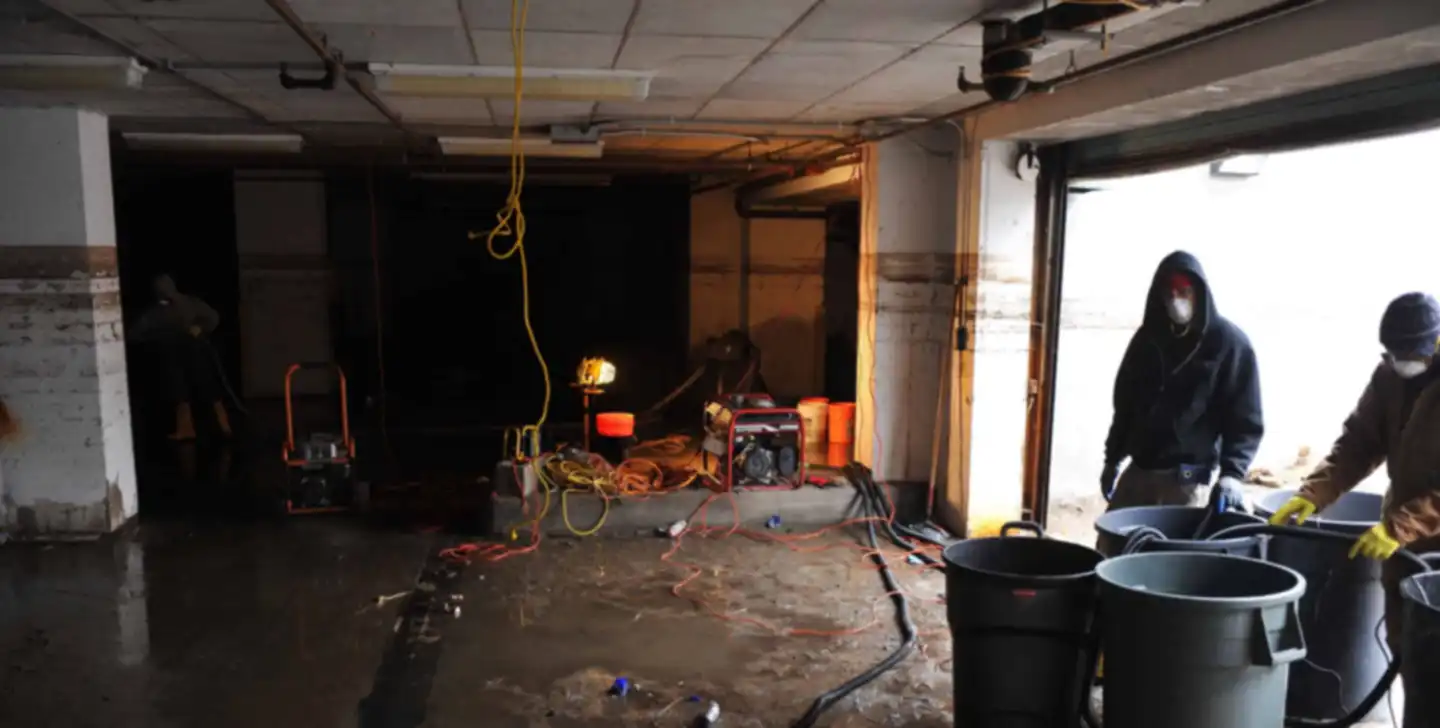
If you’re dealing with more than everyday humidity, such as a leak, a flooded room or wet drywall, a home dehumidifier with the door closed won’t be enough. EPA advises drying water-damaged materials within 24 to 48 hours to prevent mold growth, which usually takes professional water damage restoration.
Safety: Cords and Recalls
Dehumidifiers run for long periods, often unattended, so electrical safety matters.
- Use its own outlet. GE’s manual warns of a fire risk and says not to use an extension cord with its dehumidifiers, and to plug the unit into its own outlet. Follow your own model’s manual.
- Check for recalls. The US Consumer Product Safety Commission has announced large dehumidifier recalls for fire risk, including about 2.5 million Gree-made units sold from 2005 to 2013 under brands such as Frigidaire, GE, Kenmore and Danby (reannounced in 2016 after about 450 fires), and about 1.56 million more Gree-made units sold from 2011 to 2014, recalled in 2023. If your unit is older, search your brand and model number on cpsc.gov.
Damp That Won’t Go Away?
If you’re running a dehumidifier with the door closed and the room still smells musty or reads above 60%, there may be a hidden leak or mold behind the walls. We’ll connect you with local water damage and mold professionals who can find the source and fix it. Call us any time, or request a free estimate.
Frequently asked questions
Should I close the bedroom door when running a dehumidifier?
Yes, if the goal is to dry that bedroom. With the door closed, the unit only has to dry the air in one room, so humidity drops faster and the unit cycles off sooner. If you're running it to help the whole floor, leave the door open and make sure the unit is sized for the larger area.
Should the basement door be open or closed with a dehumidifier running?
Closed in most homes, so the basement unit only dries the basement and doesn't pull in humid air from upstairs. The exception is a house with air conditioning upstairs: that air is often drier, and leaving the door open can help bring basement humidity down.
Can one dehumidifier dry the whole house?
A portable unit can handle one open area if it's sized for the square footage, but it won't dry closed-off rooms. ENERGY STAR suggests a whole-home dehumidifier, connected to the ductwork, for homes with central air where humidity consistently stays above 55%.
Should I open windows while a dehumidifier is running?
No. Keep windows closed so the unit isn't trying to dry outdoor air. Opening them only makes sense when the air outside is both cooler and drier than inside, which is rare in a humid summer.
How far from the wall should a dehumidifier be?
Check your manual, because it varies by brand. GE, for example, asks for at least 18 inches of space on all sides. ENERGY STAR's general advice is to keep it away from walls and furniture so air can circulate freely.
How long should I run a dehumidifier with the door closed?
Let the humidity setting decide. Set it to around 45% to 50% and the unit will cycle off once the room gets there. EPA recommends keeping indoor humidity below 60%, ideally 30% to 50%.
Sources
- ENERGY STAR: Dehumidifiers (placement and use)
- GE Appliances: Dehumidifier owner's manual (ADHL22, ADHL25, ADHL35)
- Minnesota Power: Dehumidifier fact sheet
- EPA: A Brief Guide to Mold, Moisture and Your Home
- EPA Indoor Air Quality bulletin: Cleaning up after a flood (March 2023)
- EPA: Mold Remediation in Schools and Commercial Buildings, Chapter 3
- Building Science Corporation: BSI-115, Crawlspaces: Either In or Out
- US Department of Energy: Unvented, conditioned crawlspaces
- Green Building Advisor: Basement door open or closed with a dehumidifier?