Do Air Purifiers Help With Mold?
Quick Answer
Partly. A HEPA air purifier can capture mold spores floating in the air, and may ease a musty smell a little. It can’t remove mold growing on walls, carpet or inside ducts, and it does nothing about the moisture feeding it. EPA says air cleaners “will not resolve a mold and moisture problem.”
How Mold Gets Into the Air
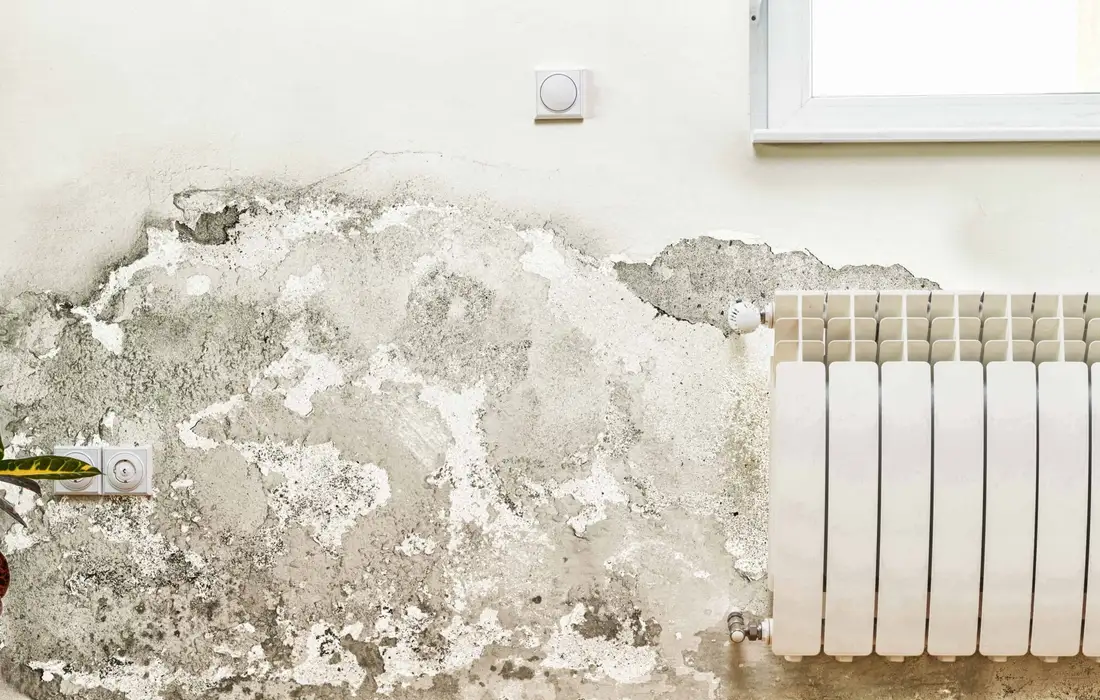
Mold spores are in the air everywhere, indoors and out. A few is normal. The trouble starts when mold finds a damp spot inside your home and begins to grow.
A growing patch releases spores, and they drift to other rooms on air currents and through the heating and cooling system. Disturbing the mold sends far more into the air at once. EPA’s remediation guidance warns that when work “disturbs mold and mold spores become airborne, then the risk of respiratory exposure goes up.”
So there are two things in the air of a moldy room: tiny particles (the spores) and the musty odor. A purifier handles them very differently.
What an Air Purifier Can Do
EPA says a HEPA filter “can theoretically remove at least 99.97% of dust, pollen, mold, bacteria, and other airborne particles with a size of 0.3 microns.” That size is the hardest to catch, and “Particles that are larger or smaller are trapped with even higher efficiency.”
In practice, a purifier with a HEPA filter can:
- Lower the spore count in the room it’s in. Fewer spores in the air means fewer to breathe in or to settle on other damp surfaces.
- Catch what a small cleanup stirs up. Running one during and after you clean a small patch helps clear the air.
- Take the edge off odors, if it has enough carbon. EPA says “Activated carbon filters can be effective, provided that there is a large amount of material used in the filter.” A thin carbon-coated sheet does little.
- Help after remediation. Once the mold is removed and the moisture is fixed, a purifier keeps everyday dust and spores down.
What an Air Purifier Can’t Do
This is the part most product pages skip.
| An air purifier can | An air purifier can’t |
|---|---|
| Capture spores floating in the air | Remove mold growing on walls, ceilings or carpet |
| Capture dust and pollen too | Reach mold inside walls or ductwork |
| Ease musty odors somewhat, with enough carbon | Stop the smell at its source |
| Clean the air in one room | Lower humidity or dry out damp materials |
| Support a cleanup | Replace a cleanup |
EPA puts it plainly: “Portable air cleaners and furnace/HVAC filters do not address the cause of mold and musty odors.” They “may remove some of the particles generated by mold,” and may help with odors in some cases, “but they will not resolve a mold and moisture problem.”
When a Purifier Is Worth Having
- After professional remediation, to keep the air clean once the source is gone.
- While you wait for an inspection. It won’t solve anything, but it can make a bedroom more comfortable for a week or two.
- In a humid climate, paired with a dehumidifier.
- For dust, pollen and pet dander, which a HEPA filter captures as well. A purifier isn’t a medical device, so talk to your doctor about any symptoms.
How to Choose One
You don’t need the most expensive unit. EPA’s guide to air cleaners covers what counts:
- CADR that fits the room. CADR (clean air delivery rate) is how much clean air the unit delivers each minute. EPA’s chart gives a minimum of 65 for a 100 square foot room, 195 for 300 square feet and 390 for 600 square feet, which is roughly two-thirds of the floor area.
- A HEPA filter. EPA notes that portable air cleaners often achieve a high CADR by using one.
- Plenty of carbon, if odor is your main complaint. EPA: “To filter gases, choose a portable air cleaner with an activated carbon filter or other filter designed to remove gases.”
- No ozone. EPA: “Avoid portable air cleaners and furnace/HVAC filters that intentionally produce ozone. Ozone is a lung irritant.”
- Noise you can live with. If noise would stop you running it, EPA suggests a unit with a low published noise rating.
- Filter costs. Before you buy, check the price of replacement filters and how often the maker says to change them.
Not sure whether you need a home unit or the bigger machine a restoration crew uses? See air scrubber vs air purifier.
Where to Put It and How Long to Run It
EPA’s advice is short:
- Where: “Consider placing the unit in the room(s) you spend the most time in.” For most people that’s the bedroom.
- Clear space: “Keep air cleaners away from curtains and anything that might block airflow.”
- How long: “Generally speaking, higher fan speeds and longer run times will increase the amount of air filtered.” An hour here and there does very little.
Air Purifier or Dehumidifier?
They do different jobs. A purifier cleans the air. A dehumidifier dries it.
For keeping mold from growing, humidity matters more, because mold needs moisture. EPA’s advice: “If possible, keep indoor humidity below 60 percent (ideally between 30 and 50 percent) relative humidity.” A dehumidifier gets you there. A purifier doesn’t change humidity at all.
If you can only buy one and your home feels damp, start with a dehumidifier and a simple humidity monitor, and add a purifier later. Our guides explain how much water a dehumidifier removes and whether to close the door when you run one.
Signs the Purifier Is Hiding a Bigger Issue
A purifier can mask mold without solving it. Watch for these:
- The smell comes back soon after you turn the purifier off.
- You can see growth, staining or bubbling paint on walls or ceilings.
- The room feels damp, or windows fog up on the inside.
- There’s been a leak, even a small one, in the past few months.
Any of these means there’s a source and it’s still active. A musty smell in the house is often the first clue. The longer hidden mold grows, the more material it damages.
Still Smelling or Seeing Mold?
If the air only feels clean while a machine is running, the machine isn’t the fix. EPA says most homeowners can handle a moldy area of “less than about 10 square feet (less than roughly a 3 ft. by 3 ft. patch)” themselves. Beyond that, or when the mold is inside walls, under floors or in the ductwork, it takes professional mold remediation to remove it and fix the moisture behind it. We’ll connect you with local mold and water damage professionals who can find the source. Call us any time, or request a free estimate.
Frequently asked questions
Will an air purifier get rid of mold?
No. It can capture mold spores in the air, but it can't remove mold growing on surfaces or fix the moisture behind it. EPA says air cleaners will not resolve a mold and moisture problem. The mold has to be cleaned up and the water source fixed.
Do air purifiers help with a musty smell?
Sometimes, a little. EPA says air cleaners may help reduce odors in some cases, and that activated carbon filters can be effective when the filter holds a large amount of carbon. The smell returns if the mold or damp causing it is still there.
Where should I put an air purifier for mold?
EPA suggests the room you spend the most time in, which for most people is the bedroom. Keep it away from curtains and anything else that might block the airflow.
Should I run an air purifier all day?
Longer is better. EPA says higher fan speeds and longer run times increase the amount of air filtered. Most people run one around the clock on a quiet setting and turn it up when the room is empty.
Is an air purifier or a dehumidifier better for mold?
They do different jobs. A dehumidifier lowers the humidity mold needs to grow, so it does more to prevent mold. A purifier only filters what is already in the air. EPA recommends keeping indoor humidity below 60%, ideally between 30% and 50%.
What is the difference between an air purifier and an air scrubber?
An air purifier is a quiet unit for everyday use in lived-in rooms. An air scrubber is a much more powerful HEPA machine that restoration crews run during mold remediation and water damage work, often ducted outdoors to keep the work area under negative pressure.