
Mold removal help, 24/7
Mold Remediation in Fort Lauderdale, FL
Mold on a wall, in a closet or behind the air handler? Call (954) 836-7911 and we'll connect you with trusted local mold remediation professionals who find the moisture source, contain the area and remove the mold safely. Below: what the job involves, what it costs, and how Florida's licensing rules protect you.
-
Call Today
-
Fort Lauderdale, FL Office
-
Send Email
What's included
- Finding the moisture source (leak, condensation, humidity)
- Containment with plastic sheeting and negative air pressure
- HEPA air filtration during the work
- Removal of moldy drywall, insulation and other porous materials
- Cleaning and treatment of hard surfaces
- Drying and advice to stop it coming back

Why mold is so common in Fort Lauderdale
Mold needs moisture, a food source and warmth, and Fort Lauderdale supplies all three for most of the year. Mornings average about 82% relative humidity and the wet season runs on dewpoints in the 70s (NCEI; NWS Miami); the annual mean temperature is 77°F. Any water that gets in and isn't dried within 24 to 48 hours is likely to grow mold (EPA), and after April 2023, June 2024 and every named storm, thousands of Broward homes sat wet, some without power.
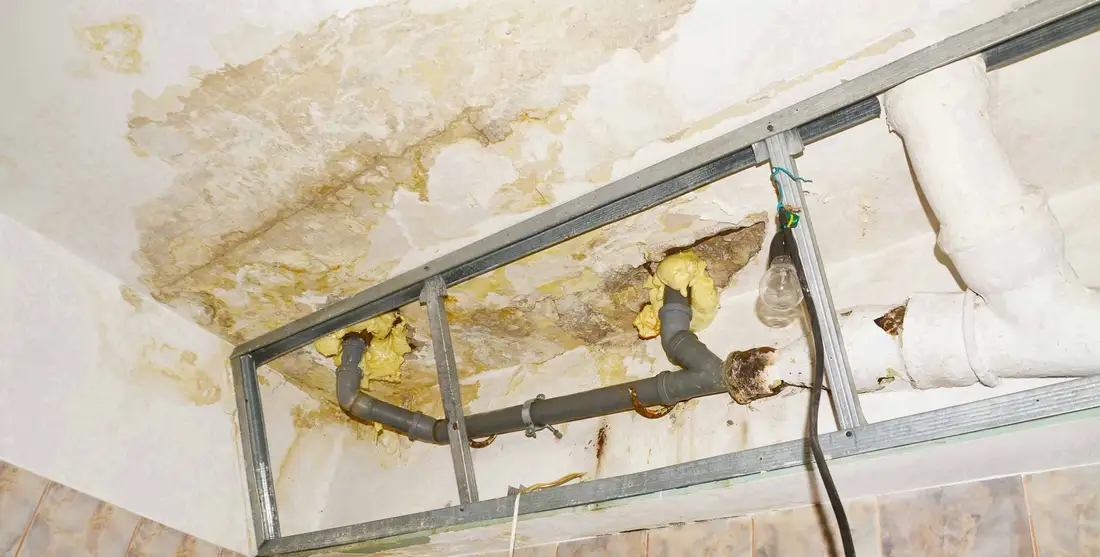
Indoors, the usual culprits are a clogged AC condensate line soaking a ceiling, an air handler closet that never dries out, a slow leak under a sink or behind a fridge, a shower that isn't ventilated, and seasonal homes left closed up with the AC set too warm. Concrete block walls don't feed mold, but the drywall, insulation, cabinets and furniture inside them do.
Florida licenses mold work: what that means for you
In Florida, mold assessment and mold remediation of growth larger than 10 square feet are licensed professions, regulated by the Department of Business and Professional Regulation (DBPR). Two rules matter to a Fort Lauderdale homeowner:
- Separate licenses. A mold assessor (license type MRSA) inspects and tests; a mold remediator (MRSR) removes. The law defines both around growth of more than 10 square feet (Florida Statutes 468.8411).
- No assessing and remediating the same job. A company that assessed your property may not remediate it within 12 months, and vice versa (Florida Statutes 468.8419). The rule exists so nobody can find mold and then sell you the fix.
Remediators must also carry at least $1 million of liability insurance that includes mold claims. Before anyone starts, ask for the license number and check it on the DBPR license search. Patches under 10 square feet don't need a licensed remediator; our guide to cleaning a small patch covers that. For an independent check after the work, see mold inspection and testing in Fort Lauderdale.
What mold remediation involves
- Find the water. Moisture meters and thermal imaging locate the leak or condensation that fed the mold. Removing mold without fixing the moisture just restarts the clock.
- Contain the area. Plastic sheeting and negative air pressure stop spores spreading to the rest of the house, with HEPA air scrubbers running.
- Remove what can't be cleaned. Moldy drywall, insulation, carpet pad and ceiling tiles are cut out and bagged. EPA guidance is that porous materials with mold growing in them generally have to be discarded (EPA).
- Clean hard surfaces. Block, studs, concrete and other hard materials are cleaned and, where appropriate, treated.
- Dry and verify. The area is dried to match the rest of the house. For larger jobs, a separate licensed assessor carries out a clearance inspection (see mold inspection and testing in Fort Lauderdale).
- Rebuild. New drywall, paint and trim, often with mold-resistant board in bathrooms and laundry rooms.
What mold remediation costs in Fort Lauderdale
Published national ranges run from about $1,200 to $9,000 depending on the source, with averages between $2,300 and $3,500 and per-square-foot figures of roughly $10 to $30 (Fixr, 2025; This Old House, 2026; Bob Vila). The spread is about size and access: a closet wall is at the low end, an attic, a whole air handler system or a post-flood ground floor at the high end. South Florida demand after a storm season pushes toward the upper figures.
Insurance usually covers mold only when it follows a covered water event (a burst pipe, for example) and often with a cap; mold from humidity or a long-neglected leak is usually excluded. The estimate comes in writing before any work starts.
Mold and your health
The CDC's summary: for some people, mold can cause a stuffy nose, sore throat, coughing or wheezing, burning eyes or a skin rash; people with asthma or mold allergies may have severe reactions, and people with weakened immune systems or chronic lung disease can get lung infections from mold (CDC). If anyone in the home is in those groups, don't disturb the mold yourself; have it removed, and keep them out of the area until it's done. You don't need to know the type of mold, and the CDC doesn't recommend testing to decide whether to clean it up.
When to call right now
- Mold covering more than about 10 square feet (a 3 by 3 foot patch), which is both the EPA's do-it-yourself limit and where Florida's licensing applies
- Mold that came back after cleaning
- A musty smell with no visible source
- Mold after a leak, flood, tide or AC overflow
- Someone in the home with asthma, allergies or a weakened immune system
Call (954) 836-7911 and we'll connect you with local mold remediation help. If the mold followed water damage that hasn't been dried, start with water damage restoration in Fort Lauderdale.
Areas served around Fort Lauderdale
The professionals we work with cover Fort Lauderdale and the communities around it, including Downtown Fort Lauderdale, Las Olas, Victoria Park, Rio Vista, Coral Ridge, Wilton Manors, Oakland Park, Lauderdale-by-the-Sea, Pompano Beach, Plantation, Sunrise, Davie, Dania Beach, Hollywood, Lauderhill, Tamarac. Not listed? Call anyway and we'll find the nearest help.
Questions
Mold Remediation in Fort Lauderdale: your questions
Do I need a licensed mold remediator in Fort Lauderdale?
For growth over 10 square feet, yes: Florida licenses mold remediation through the DBPR, and the remediator must carry mold-specific liability insurance. Ask for the license number and check it on the DBPR site before work starts. Smaller patches on hard surfaces can be cleaned with detergent and water.
Can the same company test for mold and remove it?
Not in Florida. A company that assessed a property cannot remediate it within 12 months, and a remediator cannot then assess its own work. If one firm offers both on your job, that is a red flag.
Does insurance cover mold remediation?
Often only when the mold results from a covered sudden water event, and many policies cap mold coverage. Mold from humidity, condensation or an old leak is usually excluded. Check your policy and document everything.
Should I get the mold tested first?
If you can see mold, the EPA says sampling is usually unnecessary: it needs removing whatever the type. Testing is useful when the source is unclear, when you need a clearance report after remediation, or for a dispute. See our Fort Lauderdale mold inspection page.
How long does mold remediation take?
A single room is usually one to three days plus drying time. Larger jobs, attics, air handler systems and post-flood ground floors take longer. Containment stays up until the area passes inspection.
Will it come back?
Not if the moisture is fixed. That is why the first step is finding the leak or condensation, and why the professional will tell you about ventilation, AC drain lines and humidity before they leave.
Google reviews
What customers say about Damp Solving
Genuine Google reviews from people who called Damp Solving, across all of our offices.