
Mold removal help, 24/7
Mold Remediation in Atlanta, GA
Mold in the basement, in a crawl space, on a wall or behind the air handler? Call (470) 986-0911 and we'll connect you with trusted local mold remediation professionals who find the moisture source, contain the area and remove the mold safely. Below: what the job involves, what it costs, and what to check in Georgia, which has no mold rules at all.
-
Call Today
-
Atlanta, GA Office
-
Send Email
What's included
- Finding the moisture source (basement, crawl space, leak, condensation)
- Containment with plastic sheeting and negative air pressure
- HEPA air filtration during the work
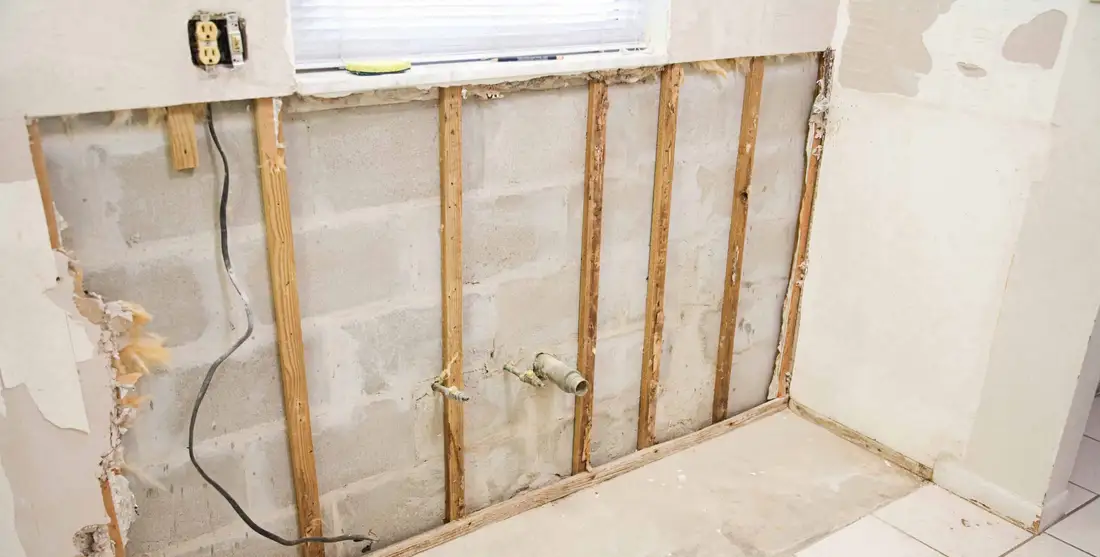
- Removal of moldy drywall, insulation, carpet and other porous materials
- Cleaning and treatment of hard surfaces
- Drying and advice to stop it coming back

Why mold is so common in Atlanta
Mold needs moisture, a food source and warmth, and an Atlanta basement supplies all three. Mornings average 81% relative humidity and 86 to 87% in high summer (NCEI), rain falls in every month of the year (NOAA), and below-grade space stays cool enough for condensation and damp enough for growth. UGA's advice is to keep basement humidity under 50%, to seal and cover the crawl space soil with a vapor barrier, and to check the sump pump (UGA Extension). Any water that gets in and isn't dried within 24 to 48 hours is likely to grow mold (EPA).
The usual culprits: a basement that took on water in a storm and was carpeted over again, a crawl space with bare earth and no ventilation, a pipe that burst in a freeze and was patched before the wall dried, a clogged AC condensate line, and bathrooms in the 40% of homes built before 1980 that were never ventilated (US Census).
Georgia has no mold rules: what to check instead
Georgia's Department of Public Health is unusually direct: indoor air quality "is not a regulated program", the department "does not offer any specific services related to mold growth indoors", and "mold inspections, testing or remediation practices have no enforceable state or federal standards"; local housing codes "generally speaking" contain no mold standard either (Georgia Department of Public Health). There is no mold license, no certificate, no state threshold.
What does apply to an Atlanta homeowner:
- A contractor license. Georgia requires a residential contractor license for work where the value or the price exceeds $2,500 (O.C.G.A. 43-41-2). Ask for the license number and check it on the Georgia Secretary of State's license verification site.
- Insurance. Ask for proof of general liability insurance that covers mold work; the contractor license doesn't require it.
- Industry certification. The IICRC's S520 is the procedural standard for mold remediation, and firms and technicians can be looked up on the IICRC locator; the ACAC's Council-certified Microbial Remediator credentials require verifiable field experience and renewal every two years (ACAC). Neither is required by law, which is exactly why they're worth asking about.
- Renters. Georgia landlords have a duty to keep a unit "in good repair and in a safe and habitable condition" and may not retaliate against tenants who request repairs (Georgia Landlord-Tenant Handbook); the handbook doesn't mention mold by name, so put the request in writing and keep photos.
Patches under about 10 square feet on hard surfaces don't need a professional at all; our guide to cleaning a small patch covers that. For an independent check after the work, see mold inspection and testing in Atlanta.
What mold remediation involves
- Find the water. Moisture meters and thermal imaging locate the leak, the seepage or the condensation that fed the mold. Removing mold without fixing the moisture just restarts the clock; in Atlanta that often means grading, gutters, the sump pump or the crawl space.
- Contain the area. Plastic sheeting and negative air pressure stop spores spreading to the rest of the house, with HEPA air scrubbers running.
- Remove what can't be cleaned. Moldy drywall, insulation, carpet pad and ceiling tiles are cut out and bagged. EPA guidance is that porous materials with mold growing in them generally have to be discarded (EPA).
- Clean hard surfaces. Studs, joists, block walls and concrete are cleaned and, where appropriate, treated.
- Dry and verify. The area is dried to match the rest of the house. For larger jobs, or where an insurer, landlord or buyer wants proof, an independent assessor can carry out a clearance inspection (see mold inspection and testing in Atlanta).
- Rebuild. New drywall, paint and trim, often with mold-resistant board in basements, bathrooms and laundry rooms.
What mold remediation costs in Atlanta
Published national ranges run from about $1,200 to $9,000 depending on the source, with averages between $2,300 and $3,500 and per-square-foot figures of roughly $10 to $30 (Fixr, 2025; This Old House, 2026; Bob Vila). The spread is about size and access: a closet wall is at the low end, a whole finished basement or a crawl space at the high end. Atlanta rates sit around the middle of the national ranges.
Insurance usually covers mold only when it follows a covered water event (a burst pipe, for example) and often with a cap; mold from humidity, seepage or a long-neglected leak is usually excluded. The estimate comes in writing before any work starts.
Mold and your health
The CDC's summary: for some people, mold can cause a stuffy nose, sore throat, coughing or wheezing, burning eyes or a skin rash; people with asthma or mold allergies may have severe reactions, and people with weakened immune systems or chronic lung disease can get lung infections from mold (CDC). If anyone in the home is in those groups, don't disturb the mold yourself; have it removed, and keep them out of the area until it's done. You don't need to know the type of mold, and the CDC doesn't recommend testing to decide whether to clean it up.
When to call right now
- Mold covering more than about 10 square feet (a 3 by 3 foot patch), the EPA's do-it-yourself limit
- Mold that came back after cleaning
- A musty smell with no visible source, especially from the basement or crawl space
- Mold after a leak, a flood, a sewer backup or a freeze
- Someone in the home with asthma, allergies or a weakened immune system
Call (470) 986-0911 and we'll connect you with local mold remediation help. If the mold followed water damage that hasn't been dried, start with water damage restoration in Atlanta.
Areas served around Atlanta
The professionals we work with cover Atlanta and the communities around it, including Buckhead, Midtown, Downtown Atlanta, Virginia-Highland, Druid Hills, Decatur, Brookhaven, Sandy Springs, Dunwoody, Chamblee, Smyrna, Marietta, Roswell, Alpharetta, East Point, College Park, Tucker, Stone Mountain. Not listed? Call anyway and we'll find the nearest help.
Questions
Mold Remediation in Atlanta: your questions
Does Georgia license mold remediators?
No. The state health department says mold inspection, testing and remediation have no enforceable state or federal standards. What you can check is the residential contractor license (required for work over $2,500), proof of insurance that covers mold work, and industry certifications such as IICRC S520 training or ACAC credentials.
Can the same company test for mold and remove it in Georgia?
Legally, yes, because there is no rule separating the two as there is in Florida and Texas. For an insurance claim, a rental dispute or a sale, though, an independent assessor who does not profit from the remediation is the report the other side will trust.
Should I get the mold tested first?
If you can see mold, the EPA says sampling is usually unnecessary: it needs removing whatever the type. Testing is useful when the source is unclear, for clearance after remediation, or for a dispute. See our Atlanta mold inspection page.
I rent. What are my rights?
Georgia landlords must keep the unit in good repair and habitable and cannot retaliate against repair requests, but state law does not name mold specifically. Put the request in writing with photos, keep copies, and if nothing happens, ask the city's code enforcement to inspect.
How long does mold remediation take?
A single room is usually one to three days plus drying time. A finished basement or a crawl space takes longer. Containment stays up until the area is verified dry and clean.
Does insurance cover mold remediation?
Often only when the mold results from a covered sudden water event, and many policies cap mold coverage. Mold from humidity, seepage or an old leak is usually excluded. Check your policy and document everything.
Google reviews
What customers say about Damp Solving
Genuine Google reviews from people who called Damp Solving, across all of our offices.