
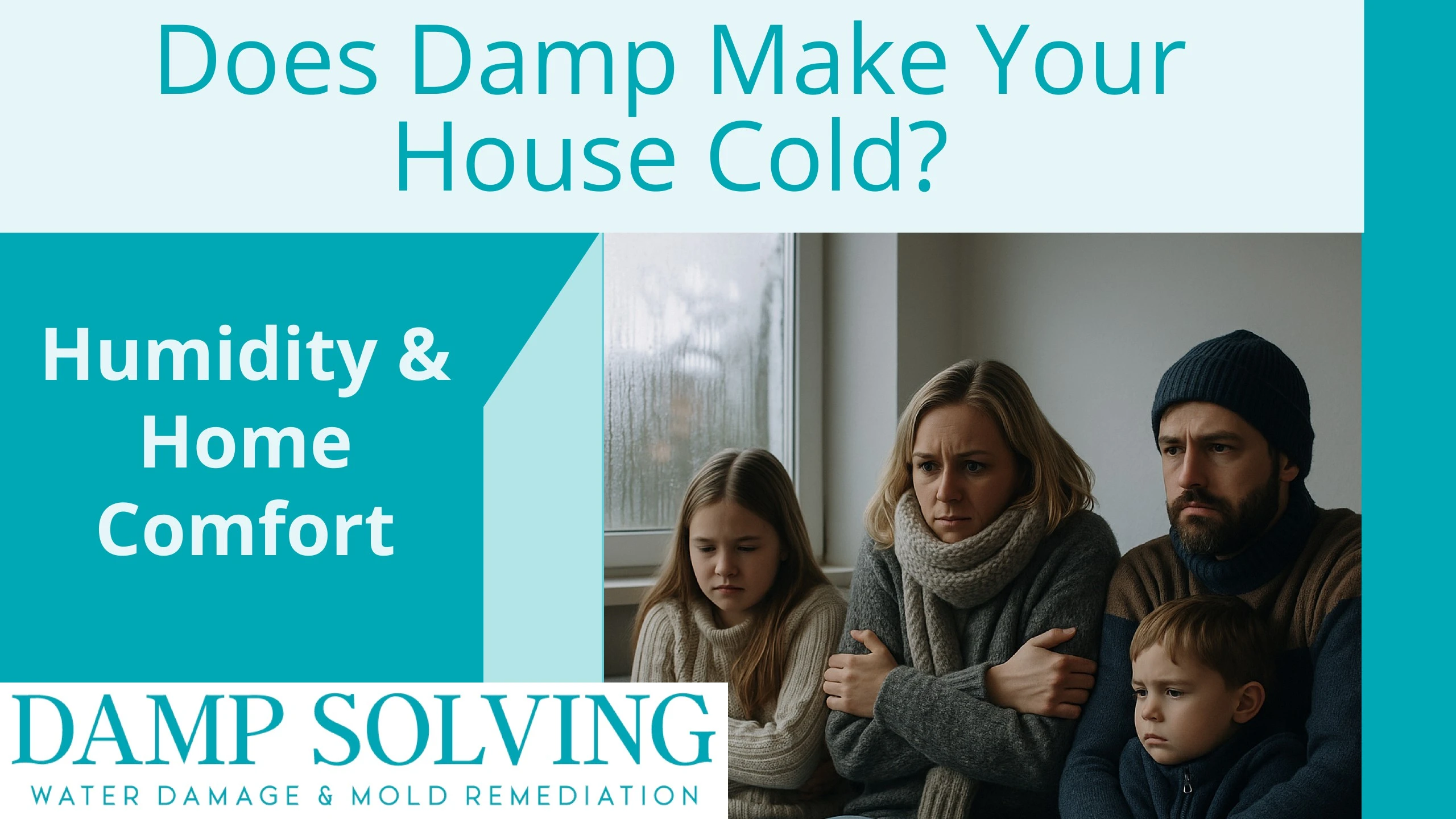
Does Damp Make Your House Feel Cold? The Science Behind Humidity and Indoor Comfort
If your home feels cold even with the heat running, excess moisture might be the culprit. High indoor humidity doesn’t just cause musty odors and water stains—it can make your house feel significantly colder than the thermostat suggests.
This guide explains the science behind why damp air feels colder, how moisture affects your home’s ability to retain heat, and what you can do to improve comfort and energy efficiency.
Why Humid Air Feels Colder Than Dry Air
At the same temperature, humid air typically feels colder than dry air when temperatures drop below about 65°F. This comes down to how your body regulates heat.
Your body constantly generates heat and releases it into the surrounding air. In dry conditions, this process works efficiently: heat radiates from your skin, and any perspiration evaporates quickly, carrying excess warmth away. Your clothing traps some of this body heat, creating an insulating layer.
When indoor air is damp, this heat-release mechanism becomes less effective. Moisture in the air saturates your clothing fibers, reducing their insulating ability. Humid air also conducts heat away from your body faster than dry air does. The result: you feel chilly even though the room temperature hasn’t changed.
The EPA recommends maintaining indoor relative humidity between 30% and 50%. When humidity rises above this range, thermal comfort drops—and so does your home’s energy efficiency.
How Dampness Affects Your Home’s Heating Efficiency
Beyond personal discomfort, excess moisture directly impacts how well your house retains heat.
Reduced Insulation Performance
Insulation materials work by trapping air in tiny pockets, which slows heat transfer. When insulation absorbs moisture, water replaces those air pockets. Since water conducts heat roughly 25 times faster than air, wet insulation loses much of its R-value—the measure of thermal resistance.
Fiberglass batts, cellulose, and even spray foam can absorb moisture from humid indoor air or water intrusion. A study by the Oak Ridge National Laboratory found that wet insulation can lose 40% or more of its thermal performance.
Cold Surfaces and Condensation
In a damp home, moisture condenses on cold surfaces like windows, exterior walls, and uninsulated pipes. This condensation cycle creates persistent cold spots and can lead to secondary problems like mold growth, wood rot, and peeling paint.
If you notice condensation on interior window surfaces, that’s a clear signal that indoor humidity is too high relative to outdoor temperatures. The moisture is literally pulling heat out of your living space.
Higher Heating Bills
When your home loses heat through damp insulation and cold surfaces, your HVAC system works harder to maintain temperature. This translates directly to higher utility bills. Controlling humidity is often one of the most cost-effective ways to improve heating efficiency—sometimes reducing heating costs by 10% to 20%.
Common Causes of Indoor Dampness
Understanding where moisture comes from helps you address the root problem rather than just treating symptoms.
Crawlspace and Basement Moisture
In many US homes—especially in the Southeast and mid-Atlantic regions—crawlspaces and basements are primary moisture sources. Ground moisture evaporates upward through concrete slabs or dirt floors, raising humidity throughout the house. Homes built over vented crawlspaces in humid climates are particularly vulnerable.
Poor Ventilation
Modern energy-efficient homes are built tight, which is great for reducing air leaks but can trap moisture inside. Bathrooms, kitchens, and laundry rooms generate significant humidity. Without adequate exhaust ventilation, that moisture spreads throughout the home.
Plumbing Leaks and Water Intrusion
Even small plumbing leaks—under sinks, behind walls, at supply line connections—add moisture to indoor air. Roof leaks and foundation water intrusion are more obvious sources but may go undetected for months in attics or wall cavities.
HVAC System Issues
Air conditioning systems remove humidity as they cool, but undersized units or those with refrigerant problems may not dehumidify effectively. In heating mode, the situation reverses: forced-air systems can actually help by circulating and warming air, but only if the moisture source is controlled.
Regional Considerations Across the US
Damp-cold dynamics vary significantly by climate zone.
Hot-Humid Climates (Southeast, Gulf Coast)
In states like Florida, Louisiana, Texas, and Georgia, summer humidity is the primary challenge. Air conditioning provides dehumidification, but problems arise in shoulder seasons when it’s too cool to run AC but still humid. Crawlspace encapsulation and whole-house dehumidifiers are common solutions.
Cold Climates (Northeast, Midwest, Mountain West)
Winter brings a different pattern: cold outdoor air holds less moisture, so indoor humidity often drops too low. However, moisture from daily activities (cooking, showering, breathing) can still cause condensation on cold windows and exterior walls. Ice dams on roofs signal heat escaping through poorly insulated attics—often worsened by moisture issues.
Mixed-Humid Climates (Mid-Atlantic, Ohio Valley)
These regions face both summer humidity and winter cold, requiring year-round moisture management. Seasonal humidity swings can stress building materials and make comfort harder to maintain.
How to Diagnose and Fix a Damp, Cold House
Taking a systematic approach helps you identify the specific moisture sources affecting your home.
Step 1: Measure Indoor Humidity
A digital hygrometer (available for under $20 at most hardware stores) tells you your actual indoor relative humidity. Take readings in multiple rooms, including the basement or crawlspace. Readings consistently above 50% during heating season indicate a moisture problem.
Step 2: Check for Condensation and Moisture Signs
Walk through your home looking for:
- Condensation on windows and cold surfaces
- Musty odors in closets or low-traffic rooms
- Peeling paint or wallpaper
- Visible mold on walls or ceilings
- Damp spots on carpets or flooring
A moisture meter (under $40 for a pin-type model) can detect elevated moisture in drywall, wood, and other materials.
Step 3: Identify the Moisture Source
Work from the ground up. Check the crawlspace or basement first, since ground moisture is the most common culprit in many homes. Inspect plumbing under sinks and around water heaters, examine bathroom and kitchen exhaust fans (they should vent outdoors, not into the attic), and look for water stains on ceilings that might indicate roof leaks.
Step 4: Implement Solutions
Depending on what you find, solutions range from DIY fixes to professional remediation.
For ventilation issues: Ensure bathroom fans are properly sized (at least 50 CFM for small bathrooms, 100+ CFM for larger ones) and ducted to the exterior. Running exhaust fans for 20 to 30 minutes after showers significantly reduces moisture.
For crawlspace moisture: Consider encapsulation—sealing the crawlspace floor and walls with vapor barrier and conditioning the space with a dehumidifier. The EPA and building science experts generally recommend this approach over traditional vented crawlspaces in humid climates.
For persistent whole-house humidity above 50%: A standalone dehumidifier or whole-house unit integrated with your HVAC system may be necessary. Look for ENERGY STAR-rated models sized for your square footage.
When to Call a Professional
Some moisture problems require professional assessment, including:
- Extensive mold growth covering more than 10 square feet
- Water intrusion from unknown sources
- Crawlspace or basement flooding
- Suspected issues inside wall cavities or HVAC ducts
Water damage restoration and mold remediation professionals have specialized equipment—thermal imaging cameras, commercial dehumidifiers, air scrubbers—to identify hidden moisture and dry affected areas properly.
Two Approaches: Reduce Humidity or Increase Heat
Ultimately, you have two paths to improve comfort in a damp, cold house: lower the humidity or raise the temperature.
Reducing humidity addresses the root cause. Proper ventilation, source control, and dehumidification make your existing heating system more effective and protect your home from moisture damage.
Raising the temperature compensates for moisture but costs more in energy. Warmer air holds more moisture before feeling saturated, which is why running the heat makes humid air feel less clammy. However, this approach treats the symptom rather than the problem—and the underlying moisture continues damaging your home.
The most effective strategy combines both: control moisture sources first, then heat efficiently.
Take Control of Indoor Moisture
A damp house doesn’t have to feel cold. By understanding the relationship between humidity and thermal comfort, you can make targeted improvements that lower heating costs, protect your home’s structure, and create a healthier living environment.
Start with a hygrometer reading to understand your current situation. If you discover moisture problems beyond basic ventilation fixes, Damp Solving’s team can help identify sources and recommend appropriate solutions—whether that’s crawlspace encapsulation, water damage remediation, or mold inspection.
Resources and Guides:
EPA – A Brief Guide to Mold, Moisture and Your Home https://www.epa.gov/mold/brief-guide-mold-moisture-and-your-home
EPA – Indoor Air Quality https://www.epa.gov/indoor-air-quality-iaq
DOE – Insulation Fact Sheet
https://www.energy.gov/energysaver/insulation
ENERGY STAR – Dehumidifiers
https://www.energystar.gov/products/appliances/dehumidifiers
25 Years of Experience
We Tackle Water Damage & Mold Remediation In Your Area.
Great info, thanks for sharing.
E. Brown – Miami, FL